
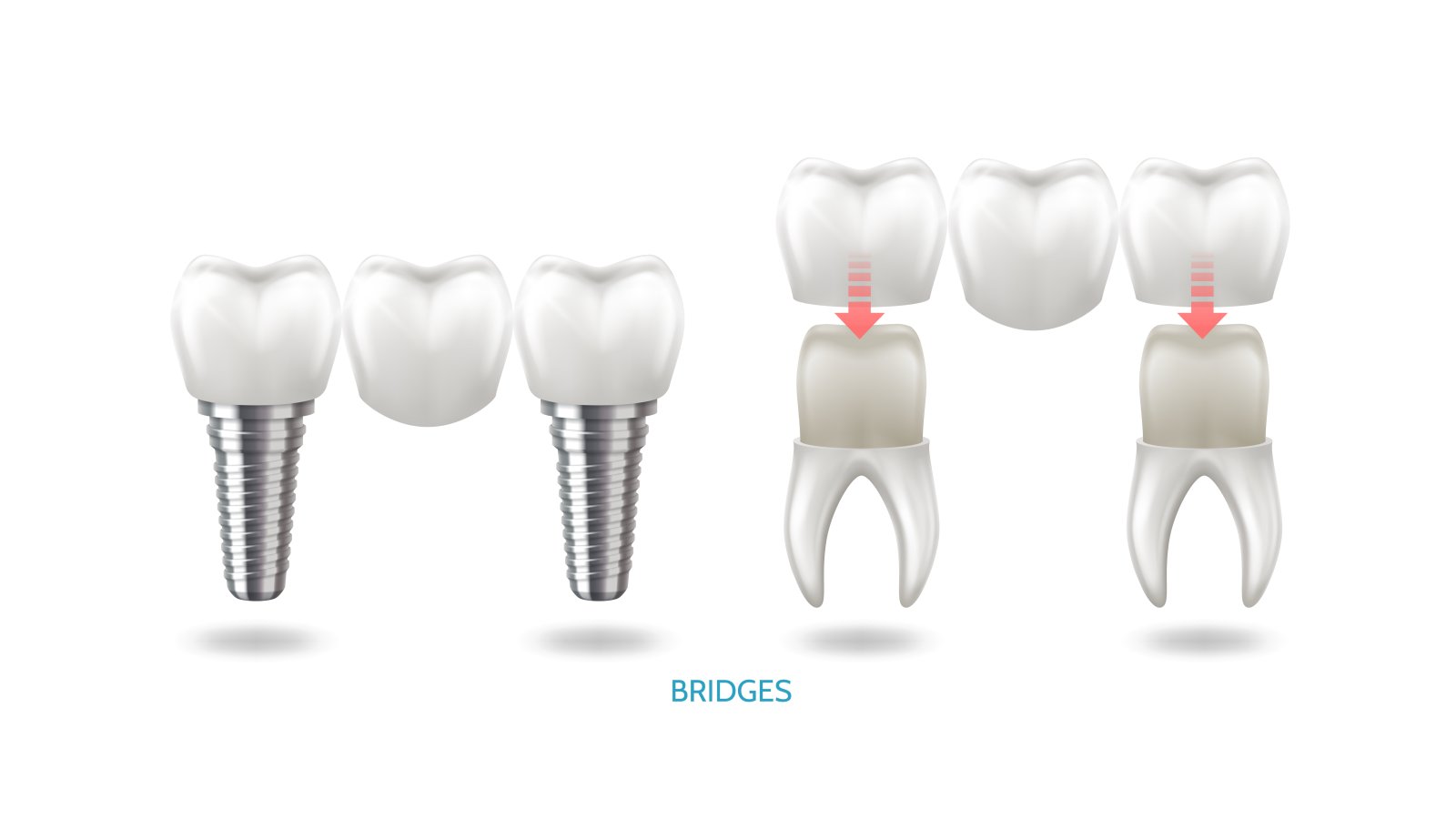
When you lose a tooth, you may wonder about the best way to replace it. Dental bridges vs dental implants is a common topic for anyone seeking tooth replacement options. Both choices can restore your smile and help you chew better. However, each has its own benefits and drawbacks. In this blog, we will explain what dental bridges and dental implants are, their differences, and how to choose the right option for you.
What Are Dental Bridges?
Dental bridges are fixed dental restorations. They fill the gap left by one or more missing teeth. Usually, a bridge has a false tooth (called a pontic) held in place by crowns on the teeth next to the gap. Because the bridge is anchored to your natural teeth, it stays in place. According to the American Dental Association, bridges can help you speak and eat more easily. They also keep your remaining teeth from shifting.
What Are Dental Implants?
Dental implants are another popular tooth replacement option. An implant is a small metal post placed into your jawbone. Over time, the bone grows around the implant, making it stable. After healing, a dentist attaches a crown to the implant. This crown looks and feels like a natural tooth. Dental implants can replace one or more missing teeth. They do not rely on nearby teeth for support.
Key Differences Between Dental Bridges and Dental Implants
Although both options replace missing teeth, there are some important differences:
Pros and Cons of Dental Bridges
Like any dental treatment, bridges have advantages and disadvantages. Let’s look at both sides.
Pros and Cons of Dental Implants
Dental implants are a strong and lasting solution. However, they also have some drawbacks.
Cost Comparison
Cost is a key factor for many people. Generally, dental bridges cost less than dental implants. However, bridges may need to be replaced more often. Implants cost more upfront, but they can last much longer. Insurance may cover part of the cost for both options. It is wise to check with your dental provider about coverage and payment plans.
How to Choose: Factors to Consider
Choosing between dental bridges and dental implants depends on several factors. Here are some things to think about:
For example, if you want a quick fix, a bridge may be better. But if you want a long-lasting solution, an implant might be best. Always talk to your dentist before making a decision.
Frequently Asked Questions
Conclusion
In summary, both dental bridges and dental implants are effective tooth replacement options. Each has its own pros and cons. Because every mouth is different, it is important to talk to a dental specialist. They can help you choose the best solution for your needs and budget. Schedule a dental consultation today at Lahotis dental to restore your smile and confidence.